
Shaping landscapes and our industry
Jarod Anderson didn’t follow the typical pathway into landscaping. After finishing high school, he enrolled at Otago University and completed a BCom in finance. It didn’t take long to realise the corporate world wasn’t for him.
“I finished my degree and realised I didn’t like finance,” he says. “Growing up, I was always hands-on and practical.”
At 16, he built a deck and water feature with help from his tradie father. After university, Jarod moved into residential building, spending four years on the tools before making a decisive shift.
“During my time as a builder, I developed a natural interest in outdoor spaces. My initial attraction to landscaping was how quickly you can create impact. Over time, I’ve realised how it sits at the intersection of construction, creativity and problem-solving.”
THINKING LONG TERM
In 2021, Jarod went out on his own with a ute, trailer and basic set of tools – fuelled by referrals from family and friends and the post-Covid boom.
“It was a learning curve, but I understood the power of word of mouth.”
Like many business owners, his hardest lessons were around communication.
“No matter how amazing the final product is, if you lapse on communication pre or mid-project, you’ll also lapse on client satisfaction. Early communication prevents 90% of problems.”
Today, Anderson Landscapes focuses on high-end residential projects – both new builds and large-scale renovations. Full landscape renewals have become a core part of the workload, as clients rethink how they use their homes. Pools, entertaining areas and outdoor kitchens are particularly popular.
The team now consists of four – Jarod, two full-time landscapers on the tools, and his partner Courtney managing administration.
“As the projects grew, I had no choice but to expand. Growth for the sake of growth doesn’t interest me. Sustainable growth with the right people does.”
That measured approach reflects his finance background, which he credits with giving him a strong grasp of pricing, back-costing and financial structure – areas many tradespeople find challenging.
HANDS ON APPROACH
Anderson Landscapes positions itself deliberately at the premium end of the residential market.
“I avoid projects where price is the only driver,” explains Jarod. “As landscapers, we know how things need to be implemented to last. If a client’s budget doesn’t allow for that approach, it isn’t the right time to proceed.”
Rather than running multiple fragmented crews, Jarod leads a tight team of three landscapers from project to project. That ensures direct responsibility for workmanship and clear lines of communication with designers and suppliers.
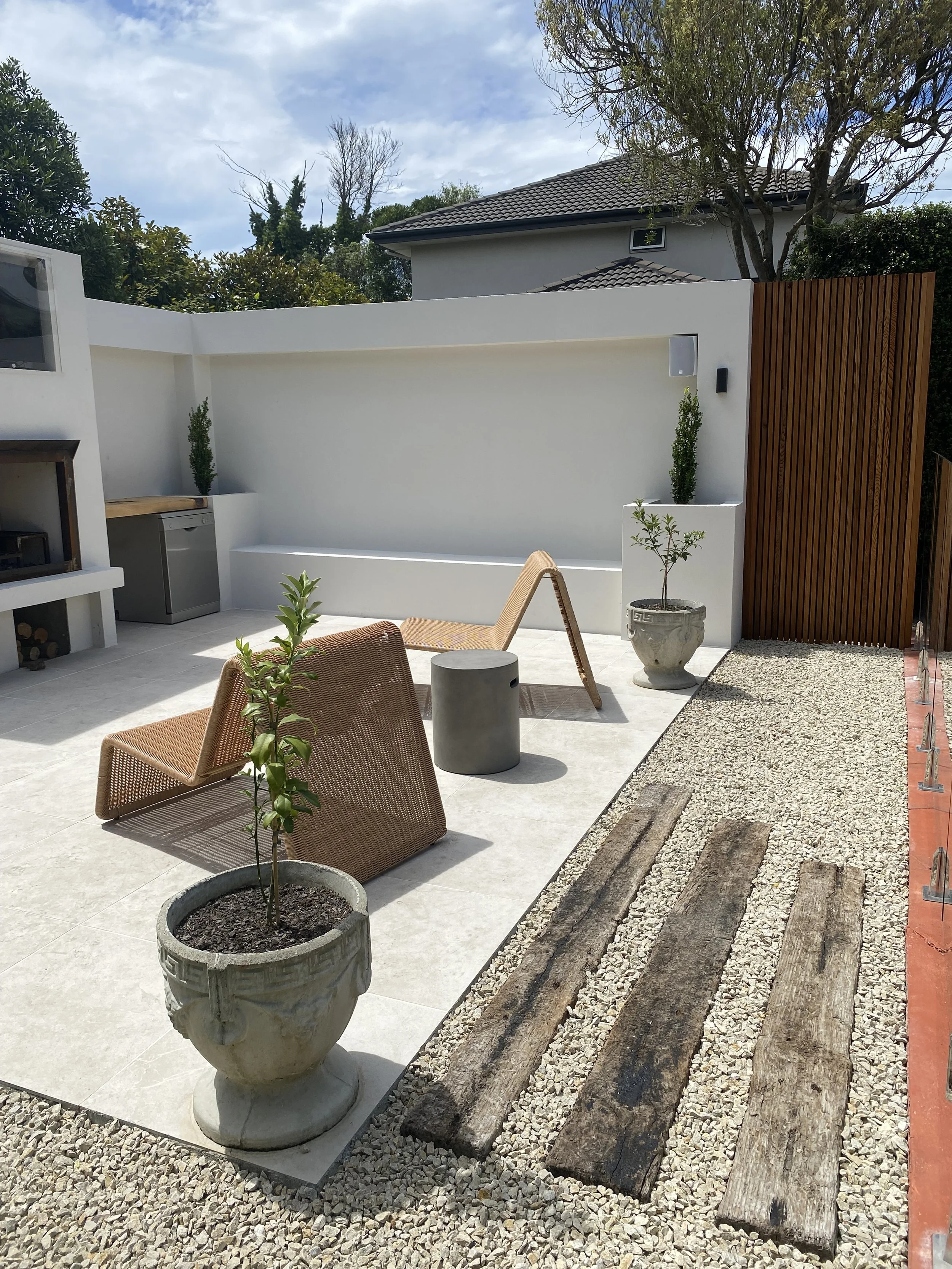
A standout example was his Richmond Hill project. What began as a simple pre-sale refresh evolved into a full-scale remodel spanning 18 months. The project grew organically – new paving, decking, a louvre system, retaining walls and a complete reimagining of the section.
“This ‘freestyle’ project really showcased our adaptability and on-site communication,” he says. “In the end, the clients decided to stay.”
Strong supplier relationships, including a long-standing partnership with Urban Paving, underpin that execution. Collaboration with local designers, concreters, blocklayers and plasterers is equally critical.
RAISING THE BAR
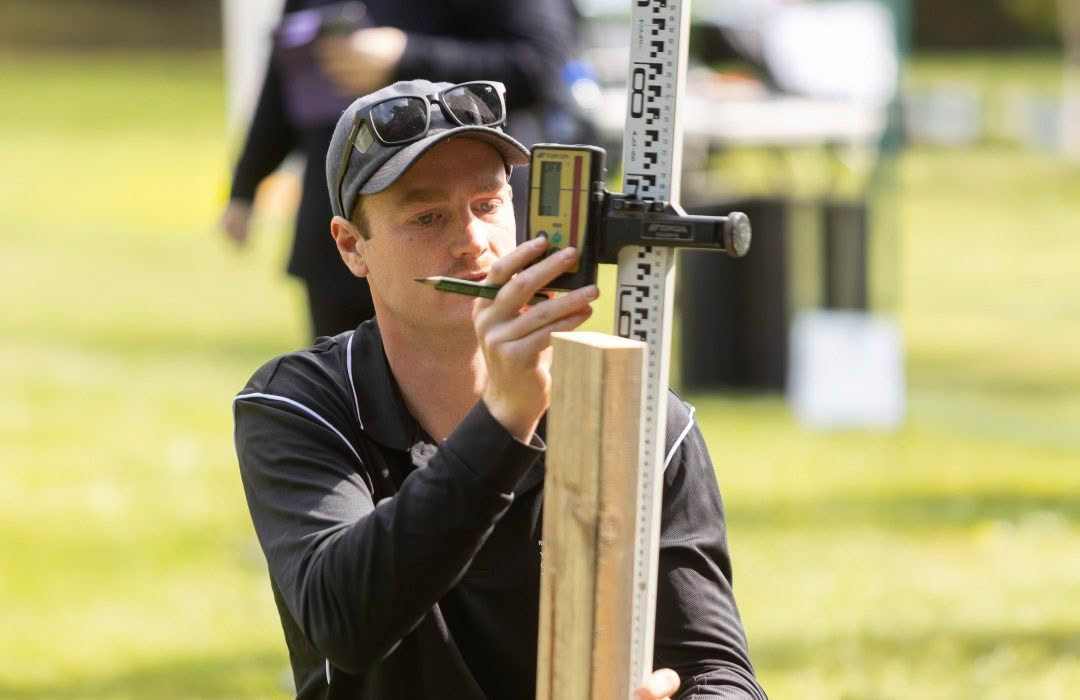
One of the defining moments in Jarod’s career came in 2024 when he entered – and won – Young Landscaper of the Year.
“It was a nice confidence boost and showed me that the standard I was aiming for was competitive nationally,” he says. “It reinforced that hard work and attention to detail are recognised in this industry.
“It also increased credibility with clients and peers. I definitely believe it’s helped win a tender or two.”
Something else that comes with winning the competition is Registered Master Landscapers membership – something Jarod places great value in.
“The biggest benefit for me is credibility and trust,” he says. “High-end residential landscaping is a luxury good. Clients need to know their investment is in safe, accountable hands.”
He believes that belonging to a regulated body reinforces standards, systems and professionalism. More broadly, he feels that landscaping is at a turning point.
“The residential construction industry is evolving rapidly. We’re seeing increasingly architectural homes and higher-spec builds. Landscaping has to be part of the conversation.”
Too often, he says, outdoor spaces are treated as an afterthought.
“In my view, the end goal is for architectural new builds to be designed around their landscaping, not the other way around. The home and outdoor environment should feel cohesive and intentional.”
For that shift to occur, strong industry representation is essential.
“If we want clients to invest properly in their outdoor spaces, they need confidence in process, contracts, warranties and workmanship. Industry bodies help create that framework.”
Over the next few years, Jarod plans to continue building a small, high-performing team focused on quality residential work and architectural projects.
“We want to be known for quality and integrity.”
Family remains a powerful motivator – the arrival of his first child in 2022 another defining milestone – as is a broader ambition of elevating the trade.
If the trajectory of his career so far is any indication, Jarod is not just building landscapes, he’s helping shape the industry’s future.
What is the biggest challenge of running a small business
CONSIDERATE DESIGN Interviewee: Sam Moore - Owner Location: Nationwide Staff: 1 Ive been self-employed for seven years and running a design and consultancy business, called Considerate Design, for the past three. Before that I was doing garden maintenance. Running a design and consultancy is a completely different model, and it was initially difficult for me to increase my pricing. To set the right price, you need self-belief and to know your worth. Coming to terms with that can be tricky. Pricing too low was a mistake I learned from during my maintenance days, as Id get work that I didnt want to do, like hand weeding the same small garden every two weeks. As soon as I put my price up, that work fell away and I was left with work that was interesting, and for which I felt my experience was being valued. Being a sole trader, its also difficult knowing when its an appropriate time to expand your workforce. Im close to doing that now, weighing up what I can afford and what I can get in return. For example, if I can hire someone to do admin work in two hours that would take me five, that gives me three hours I can be carrying out work for clients. However, Im still weighing up whether to take that leap! VAN DER FITS LANDSCAPES Interviewee: Jackson van der Fits - Owner Location: Taranaki Staff: 1 I think the biggest challenge is that when I started the business, Id been living in Melbourne for eight years, so I didnt have contacts for nurseries or other suppliers. In terms of starting a small business, you have to realise that you will be paying tax/provisional tax, GST and ACC, and thats something you learn about quickly. The first time it comes around, you think you have put aside a good amount of money and then you get hit with it all at once. Its a big eye opener and a huge learning curve. Until it comes in, you dont realise how much of a chunk it all is. As well, you can almost guarantee some machine will need servicing or fixing around the same time. That said, my biggest lesson was in pricing. You dont want to be too cheap, otherwise people will think youre a cowboy. But you dont want to be too expensive either, as you need to get work. The challenge is to build up a good reputation as quickly as possible and put your prices up accordingly. Something else that Ive found is key is having confidence in your skillset and your work, which can be a challenge in itself. GRASSHOPPER GARDENS Interviewee: Stephen Waspe - Director Location: Auckland Staff: 50 I started Grasshopper Gardens in 2019 with a small crew. One of the biggest challenges was finding skilled staff who didnt require a lot of training. At the time, we didnt have the time or resources to train people from scratch. These days things are different and were proud to run apprentice schemes for aspiring landscapers who want to build a career in the industry. Not long after launching the business, we were hit by Covid. It was a very challenging time, trying to keep staff paid while hoping our existing clients would stay with us. Fortunately, we managed to weather that storm and slowly rebuild and grow. One challenge that never seems to go away is keeping up with health and safety legislation. Its something we take very seriously, but the difficulty comes from the ever-evolving nature of the regulations and with more changes always on the horizon, staying up to date requires constant attention. Another ongoing challenge is the lack of appreciation for skilled landscapers and gardeners compared with other trades. Sometimes when we quote jobs, clients are surprised by the cost. What many people dont see is the level of expertise involved in producing high-quality work, as well as the cost of material including plants and trees that have been nurtured before they ever reach a garden.