
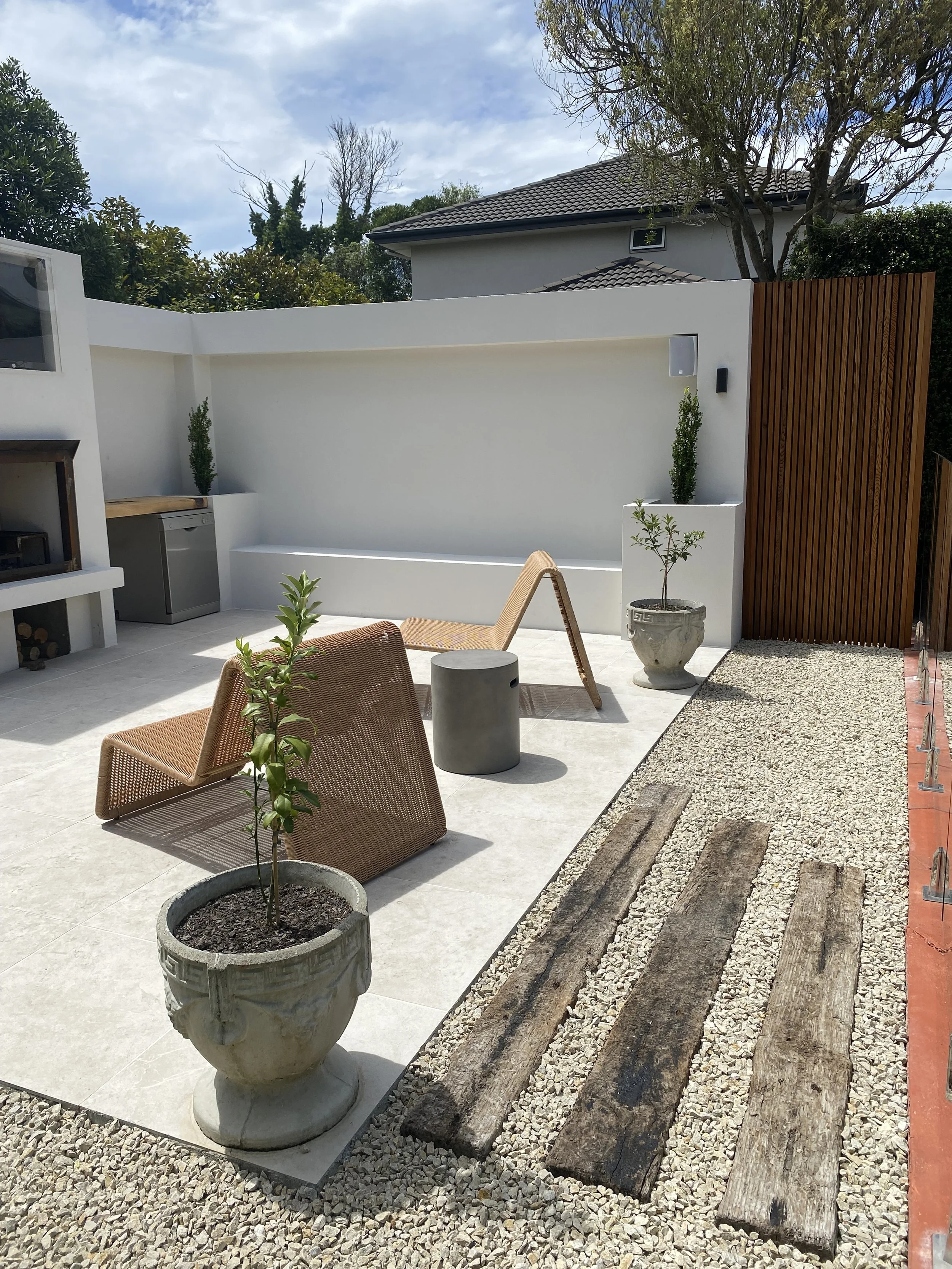
Shaping landscapes and our industry
Jarod Anderson didn’t follow the typical pathway into landscaping. After finishing high school, he enrolled at Otago University and completed a BCom in finance. It didn’t take long to realise the corporate world wasn’t for him.
“I finished my degree and realised I didn’t like finance,” he says. “Growing up, I was always hands-on and practical.”
At 16, he built a deck and water feature with help from his tradie father. After university, Jarod moved into residential building, spending four years on the tools before making a decisive shift.
“During my time as a builder, I developed a natural interest in outdoor spaces. My initial attraction to landscaping was how quickly you can create impact. Over time, I’ve realised how it sits at the intersection of construction, creativity and problem-solving.”
THINKING LONG TERM
In 2021, Jarod went out on his own with a ute, trailer and basic set of tools – fuelled by referrals from family and friends and the post-Covid boom.
“It was a learning curve, but I understood the power of word of mouth.”
Like many business owners, his hardest lessons were around communication.
“No matter how amazing the final product is, if you lapse on communication pre or mid-project, you’ll also lapse on client satisfaction. Early communication prevents 90% of problems.”
Today, Anderson Landscapes focuses on high-end residential projects – both new builds and large-scale renovations. Full landscape renewals have become a core part of the workload, as clients rethink how they use their homes. Pools, entertaining areas and outdoor kitchens are particularly popular.
The team now consists of four – Jarod, two full-time landscapers on the tools, and his partner Courtney managing administration.
“As the projects grew, I had no choice but to expand. Growth for the sake of growth doesn’t interest me. Sustainable growth with the right people does.”
That measured approach reflects his finance background, which he credits with giving him a strong grasp of pricing, back-costing and financial structure – areas many tradespeople find challenging.
HANDS ON APPROACH
Anderson Landscapes positions itself deliberately at the premium end of the residential market.
“I avoid projects where price is the only driver,” explains Jarod. “As landscapers, we know how things need to be implemented to last. If a client’s budget doesn’t allow for that approach, it isn’t the right time to proceed.”
Rather than running multiple fragmented crews, Jarod leads a tight team of three landscapers from project to project. That ensures direct responsibility for workmanship and clear lines of communication with designers and suppliers.
A standout example was his Richmond Hill project. What began as a simple pre-sale refresh evolved into a full-scale remodel spanning 18 months. The project grew organically – new paving, decking, a louvre system, retaining walls and a complete reimagining of the section.
“This ‘freestyle’ project really showcased our adaptability and on-site communication,” he says. “In the end, the clients decided to stay.”
Strong supplier relationships, including a long-standing partnership with Urban Paving, underpin that execution. Collaboration with local designers, concreters, blocklayers and plasterers is equally critical.
RAISING THE BAR
One of the defining moments in Jarod’s career came in 2024 when he entered – and won – Young Landscaper of the Year.
“It was a nice confidence boost and showed me that the standard I was aiming for was competitive nationally,” he says. “It reinforced that hard work and attention to detail are recognised in this industry.
“It also increased credibility with clients and peers. I definitely believe it’s helped win a tender or two.”
Something else that comes with winning the competition is Registered Master Landscapers membership – something Jarod places great value in.
“The biggest benefit for me is credibility and trust,” he says. “High-end residential landscaping is a luxury good. Clients need to know their investment is in safe, accountable hands.”
He believes that belonging to a regulated body reinforces standards, systems and professionalism. More broadly, he feels that landscaping is at a turning point.
“The residential construction industry is evolving rapidly. We’re seeing increasingly architectural homes and higher-spec builds. Landscaping has to be part of the conversation.”
Too often, he says, outdoor spaces are treated as an afterthought.
“In my view, the end goal is for architectural new builds to be designed around their landscaping, not the other way around. The home and outdoor environment should feel cohesive and intentional.”
For that shift to occur, strong industry representation is essential.
“If we want clients to invest properly in their outdoor spaces, they need confidence in process, contracts, warranties and workmanship. Industry bodies help create that framework.”
Over the next few years, Jarod plans to continue building a small, high-performing team focused on quality residential work and architectural projects.
“We want to be known for quality and integrity.”
Family remains a powerful motivator – the arrival of his first child in 2022 another defining milestone – as is a broader ambition of elevating the trade.
If the trajectory of his career so far is any indication, Jarod is not just building landscapes, he’s helping shape the industry’s future.
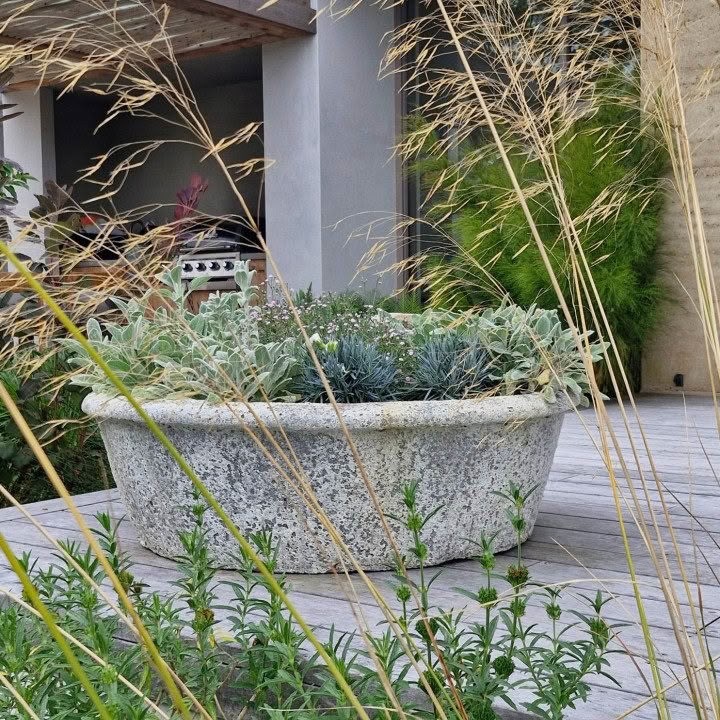
Supreme Winner
Urban Sanctuary
- Maintainance of the Year
- Softscape Residential & Commercial of the Year
A rewarding career
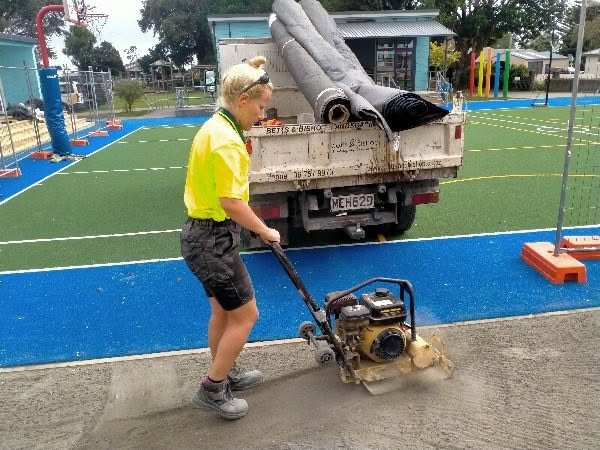
In her final year of school, Zo went on a 12-month student exchange to Nagasaki, Japan, before completing her degree, a Bachelor of International Studies and Japanese language, at the International Pacific College. After graduating, she sought a role using her qualification but didnt land the type of job she wanted, instead taking on administration and customer service roles. A keen triathlete, Zo found her office day jobs were not satisfying her drive to succeed and hindered her ability to get out and train. I like being outdoors. I kept thinking what can I do that is outdoors and will fit with my training? Perhaps something in horticulture or landscaping. In 2019, she moved to Wellington from Taranaki and decided to look for work that would allow me to be outdoors and fit with my training. FALLING IN LOVE WITH LANDSCAPING The seed was sown when an agency placed her in a role at City Care, working on parks and recreation areas. Her next step was a role with Aspen Landscapes Ltd, where she was encouraged to do the Primary ITO amenity apprenticeship on-the-job learning that teaches the skills and knowledge to build and maintain stunning gardens and public spaces. I absolutely loved it, says Zo. Starting from a blank canvas and transforming peoples properties into something beautiful I get a real satisfaction from that achievement. Zos passion for the industry was evident, as was her skill, and she was quickly promoted to Team Leader with Aspen. She completed her apprenticeship earlier this year and, soon after, moved back to Taranaki, where she landed the role as a Team Lead with Betts & Bishop. But one apprenticeship under her belt isnt enough for this high achiever. Zo is now working on a landscape construction apprenticeship through Primary ITO and is about to start an online Landscape Design course with Wintec. I am absolutely loving living in Taranaki and the work/life balance is amazing, she says. When I'm not obsessing with everything landscaping, I am obsessing with triathlons still and can't wait for my next event! RALLYING GENDER DIVERSITY Zo is enthusiastic about encouraging other women into landscaping. She says the work particularly suits those who like to keep fit. It is tough work, but the satisfaction is amazing. You get the endorphins from the work itself and then you get to see the before and after of what you have produced, she says. You could spend loads of money going to a gym to get fit, but with this job you dont need to. When Zo worked at Aspen, there were eight women in the team, and she says the skills they bring often compliment those of the men. Women look at things in a different way and often bring more of that detail to completing a job. With landscapers in high demand, Zo says theres plenty of opportunities for jobs, study and a career path, and she's found it easy to fit the study in around her work. It has been awesome. I have learnt heaps at the classes and been able to put everything I am learning back into my daily work. While Zo previously would have said that soft landscaping was her passion, she is really enjoying the construction side of things and says there are no limits. I enjoy learning anything and everything to with landscaping, so theres no telling where that might end! SLOW BUT STEADY SHIFT Primary ITO's sector manager for landscaping and arboriculture Mark Orr says the make-up of the sector is changing, albeit slowly. Of the 621 people currently training in landscaping, just under 10% are women. In the past, there were very few women training in landscaping, but that number is rising. At the start of June, there were 61 women in on-the-job landscaping training which is significantly more than the 39 women at the same time last year, says Mark. It can definitely get better, but its a great start, especially given it was only about 15 years ago that the first woman graduated from a landscaping apprenticeship. He said its worth noting that women are also involved in other parts of the industry, such as design or management roles, which might not be captured by Primary ITOs numbers.
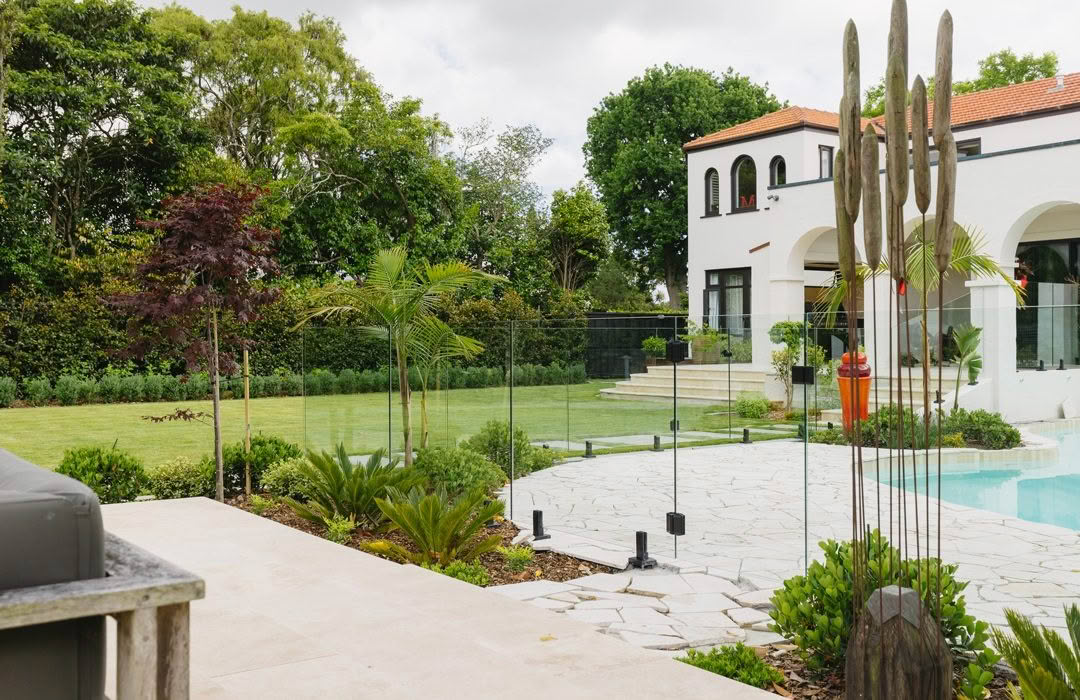
Resort living reimagined in Palmerston North
When homeowners Stu and Kate talked to architects about updating their Palmerston North home, they were asked a simple question rebuild or restore? We were asked if we wanted to build a new home. But we wanted to do the old house up, because it was unique and had good bones, explains Stu. The garden is an extension of that. We tried to stay true to the old, but brought in the new as well. That thinking now defines the entire 2100m2 property. Where part of the property was overgrown and largely shaded, the entire section has been reimagined as a layered landscape of lawn, paving and planting that extends the character of the home rather than competing with it. The transformation did not happen overnight. Delivered in stages alongside a two-year house renovation completed by Harman Brothers, the landscape evolved gradually, shaped by an ongoing relationship between the homeowners and Registered Master Landscapers member Total Landscape Solutions Matt Morrison. CREATING A BLANK CANVAS Before work began, the site had so much potential but felt disconnected. Palms and conifers crowded the boundaries and large trees limited sunlight to the backyard. Matt, owner of Total Landscape Solutions, had previously carried out garden maintenance at the property and understood its limitations. He knew Light was the critical issue and that its important to strike the right balance when it comes to tree removal. It can also be quite a difficult decision for homeowners. On our previous house, Matt had suggested we remove some trees, but we decided to keep them, says Stu. We saw the consequences of that decision and learned to trust his advice. This time, we chose to remove a lot of trees, and it gave us a blank canvas. The impact was immediate. Increased sunlight changed not only how the garden looked but how it functioned. The new planting grew quickly at the right level, says Kate. Now, when the sun hits in the evening, its a completely different space. DESIGNING IN REAL TIME Instead of following a fixed design from day one, the landscape was an evolution of ideas. Matt did most of the design as project progressed, Stu says. Perimeter hedging was planted early to establish structure and privacy while the house works were underway. Because the family moved out during the renovation, the plants had time to settle and grow. The increased natural light opened new planting opportunities. The palette now combines structure with softness, including rhododendrons, azaleas, hydrangeas and feature trees such as crepe myrtle and michelia. Tropical elements near the pool add texture and seasonal presence. Id pick up different plants I thought would work and place them to help Kate and Stu visualise the space, says Matt. Stu credits Matts plant knowledge as central to the projects success. His knowledge is exceptional and his ability to pick the right plants for the right space is key. Down a once-dark side pathway, Matt was given creative freedom. We gave him free reign to make it more of a native area, Stu says. He added stepping stones and wooden sleepers to define the space and then we added lighting. It looks really cool. The front garden was also reworked as it had become dense with self-seeded plants. It was selectively cleared with key specimens retained and the remainder replanted to provide clarity and cohesion. Careful soil preparation and irrigation have ensured strong establishment. The planting has really responded well, Matt says. Its looking healthy, which comes down to proper soil prep. MATERIAL GAINS As construction continued, Total Landscape Solutions returned in stages paving around the pool, reworking the courtyard, constructing a raised entertainment area, laying turf and replanting the front and side gardens. At one point, we even thought about moving the pool but were so pleased we didnt. Matts wife Becs advice here was much appreciated, says Kate. By removing the terracotta and replacing it with crazy paving, it all brought it to life. It completely modernised the area to suit the house. It feels like a brand-new pool. Material selection became a defining feature of the project. The clients sourced their own pavers a process Stu describes as a journey before settling on Travertine crazy paving and matching 600x400 pavers from Natural Stone Imports in Taup. Laying crazy paving is a bit like doing a jigsaw all day, but the end result looks great, says Matt. At points, Matt suggested refining the material palette. At one stage, crazy paving was going to be around the outdoor fire, but I suggested a more uniform look for that space, with crazy paving for the pool area, he says. It really worked. The combination provides contrast without visual clutter. Rectangular pavers anchor the fire and patio spaces, while the irregular crazy paving softens the pool surrounds. The pool itself also needed to be refurbished as it was leaking. That work was carried out by RML key sponsor Mayfair Pools, using its latest resurfacing technology, which effectively forms a new fibreglass pool within the existing structure. To complete the transformation, pencil waterline tiles in a natural travertine tone were selected to match the crazy paving. Around the pool, traditional fencing was replaced with frameless glass installed by long-time collaborator Grant Meads. It really gave us visual flow, which was awesome, says Stu. The uninterrupted sightlines enhance the sense of openness a key goal from the outset. FLOW AND FUNCTION Improving circulation between indoor and outdoor areas was central to the redesign. The renovated house features multiple entertaining zones and the landscape needed to echo that flexibility. We wanted easy flow, says Kate. Getting from the pool to the patio and around the sides is simple. The architecture helped with that but the landscaping really tied it together. In winter, the family uses different indoor areas depending on light and warmth. In summer, the activity shifts outdoors. There are different spaces outside, each with its own purpose it all works really well. The raised entertainment area with its outdoor fire has become a focal point. It has created a whole new living space, Stu says. Now we spend a lot of time there in the evenings. The overall sense of space is huge and weve got nice access from the back of the house to the patio and fireplace area. BUILT ON TRUST Undertaking a project of this scale with good friends can be complex. Expectations are high and communication must be clear. It was important to maintain our relationship, personally and professionally, says Matt. I was on site a lot and did a lot of the work myself, I wanted to make sure everything was perfect. For Stu, that attention to detail reinforced the trust that underpinned the project. We thought we knew what we wanted early on, he says. But through the process, we learned to trust Matt. Clearing the trees, refining the paving, adjusting ideas as we went that made all the difference. Today, the garden feels inseparable from the home open, welcoming and full of light. Its created a whole new living space, Stu says. It feels like a natural extension of the house and of us.
What is the biggest challenge of running a small business
CONSIDERATE DESIGN Interviewee: Sam Moore - Owner Location: Nationwide Staff: 1 Ive been self-employed for seven years and running a design and consultancy business, called Considerate Design, for the past three. Before that I was doing garden maintenance. Running a design and consultancy is a completely different model, and it was initially difficult for me to increase my pricing. To set the right price, you need self-belief and to know your worth. Coming to terms with that can be tricky. Pricing too low was a mistake I learned from during my maintenance days, as Id get work that I didnt want to do, like hand weeding the same small garden every two weeks. As soon as I put my price up, that work fell away and I was left with work that was interesting, and for which I felt my experience was being valued. Being a sole trader, its also difficult knowing when its an appropriate time to expand your workforce. Im close to doing that now, weighing up what I can afford and what I can get in return. For example, if I can hire someone to do admin work in two hours that would take me five, that gives me three hours I can be carrying out work for clients. However, Im still weighing up whether to take that leap! VAN DER FITS LANDSCAPES Interviewee: Jackson van der Fits - Owner Location: Taranaki Staff: 1 I think the biggest challenge is that when I started the business, Id been living in Melbourne for eight years, so I didnt have contacts for nurseries or other suppliers. In terms of starting a small business, you have to realise that you will be paying tax/provisional tax, GST and ACC, and thats something you learn about quickly. The first time it comes around, you think you have put aside a good amount of money and then you get hit with it all at once. Its a big eye opener and a huge learning curve. Until it comes in, you dont realise how much of a chunk it all is. As well, you can almost guarantee some machine will need servicing or fixing around the same time. That said, my biggest lesson was in pricing. You dont want to be too cheap, otherwise people will think youre a cowboy. But you dont want to be too expensive either, as you need to get work. The challenge is to build up a good reputation as quickly as possible and put your prices up accordingly. Something else that Ive found is key is having confidence in your skillset and your work, which can be a challenge in itself. GRASSHOPPER GARDENS Interviewee: Stephen Waspe - Director Location: Auckland Staff: 50 I started Grasshopper Gardens in 2019 with a small crew. One of the biggest challenges was finding skilled staff who didnt require a lot of training. At the time, we didnt have the time or resources to train people from scratch. These days things are different and were proud to run apprentice schemes for aspiring landscapers who want to build a career in the industry. Not long after launching the business, we were hit by Covid. It was a very challenging time, trying to keep staff paid while hoping our existing clients would stay with us. Fortunately, we managed to weather that storm and slowly rebuild and grow. One challenge that never seems to go away is keeping up with health and safety legislation. Its something we take very seriously, but the difficulty comes from the ever-evolving nature of the regulations and with more changes always on the horizon, staying up to date requires constant attention. Another ongoing challenge is the lack of appreciation for skilled landscapers and gardeners compared with other trades. Sometimes when we quote jobs, clients are surprised by the cost. What many people dont see is the level of expertise involved in producing high-quality work, as well as the cost of material including plants and trees that have been nurtured before they ever reach a garden.